

13 Early Warning Signs of a Sluggish Thyroid (According to New 2024-2025 Research)
Have you ever felt as though everything in your life is perfectly on track with good sleep, healthy eating, and regular exercise, yet exhaustion, puffiness, and a strange mental fog still linger no matter what you try?
If your body seems to operate at half-speed despite your best efforts, rest assured that millions of women across the USA, UK, and beyond experience the exact same frustration, often hearing from doctors that their lab results appear perfectly normal.
Emerging research from 2024 and 2025 reveals that a sluggish or underactive thyroid, particularly the subtle form known as subclinical hypothyroidism, affects between 3 and 8 percent of the population, with significantly higher rates among women, and this condition frequently escapes detection through standard testing.
What New Research Actually Says About Your Thyroid in 2025

Recent studies have shifted the conversation around thyroid health in profound ways, explaining why so many people feel terrible even when basic blood work returns within the broad “normal” range.
The traditional TSH reference range of 0.5–4.5 mIU/L, long considered acceptable, now faces serious questioning, as leading endocrinologists argue that an optimal range lies closer to 0.5–2.5 mIU/L, with values in the high-normal zone linked to greater cardiovascular risk.
Furthermore, inflammation drives the majority of cases, with Hashimoto’s thyroiditis, an autoimmune condition in which the immune system mistakenly attacks the thyroid gland, emerging as the primary culprit behind a slowing metabolism.
Early Warning Signs of a Sluggish Thyroid
These symptoms can build gradually over time, often brushed off as stress, ageing, or lifestyle factors. When they appear together, however, they may offer an important window into how your thyroid is functioning.
1. Persistent, Overwhelming Fatigue

This kind of tiredness goes far beyond ordinary fatigue and settles into a deep, unshakeable exhaustion that doesn’t improve even after a full night of sleep.
People often describe waking up feeling as though they never slept at all, pushing themselves through the day with little energy, and struggling to make it through basic tasks.
This happens because the body’s energy production relies heavily on active thyroid hormones, and when those hormones dip, the cells simply don’t generate the energy needed for normal daily functioning.
Studies show that fatigue is one of the most widely reported symptoms among people experiencing early thyroid issues.
2. Unexplained Weight Gain or Difficulty Losing Weight

This is not the usual sort of weight fluctuation. People often notice five, ten, or even fifteen pounds of gradual weight gain that appears despite maintaining their usual diet and activity routine.
The weight tends to settle around the midsection and face, creating a sense of puffiness that feels frustrating and unexplained.
A sluggish thyroid slows the body’s metabolic rate, reducing the number of calories burned at rest.
Some of the added weight may also be due to subtle fluid retention, which contributes to the swollen appearance that many people report when thyroid function declines.
3. Feeling Cold When Others Are Comfortable

One of the earliest and most noticeable signs of low thyroid function (hypothyroidism) is a persistent internal chill. This isn’t the typical feeling of cold caused by a drop in temperature; rather, it stems from the body’s reduced ability to generate heat.
Thyroid hormones—primarily T3 (triiodothyronine) and T4 (thyroxine)—play a central role in regulating metabolism and thermogenesis. They stimulate cells in muscles, liver, and brown fat to produce heat by increasing the rate at which energy is consumed.
When hormone levels drop, energy production slows, and the body becomes inefficient at generating warmth. This is why people with low thyroid often feel cold even in normally warm environments.
Hands and feet are particularly susceptible because the body prioritizes core temperature, reducing blood flow to extremities. Layering clothing becomes instinctive, yet it only partially compensates for the internal chill.
4. Constipation and Slower Digestion

Thyroid hormones also regulate gastrointestinal motility, which is the rhythmic contraction of the intestinal muscles (peristalsis) that moves food through the digestive system.
In hypothyroidism, these hormones are deficient, slowing muscular contractions and resulting in constipation, bloating, and a feeling of fullness after meals.
Slowed digestion may also affect nutrient absorption, potentially leading to deficiencies in vitamins and minerals over time.
Research shows a strong gut–thyroid connection, with thyroid dysfunction sometimes contributing to changes in gut microbiota and enzyme activity.
In essence, even mild declines in thyroid activity can significantly alter digestive comfort and bowel habits, making regular, effortless bowel movements less frequent.
5.Brain Fog and Poor Concentration

Cognitive function is heavily influenced by thyroid hormones. The brain, particularly areas like the hippocampus and prefrontal cortex, contains a high density of thyroid hormone receptors.
These hormones regulate neurotransmission, synaptic plasticity, and the energy metabolism of neurons.
When thyroid levels decline, neural activity slows, leading to brain fog—a sense of mental sluggishness where concentration is difficult, memory is poor, and decision-making requires more effort.
Words may be harder to recall, and performing complex mental tasks may feel exhausting.
Even subclinical hypothyroidism (mild hormone deficiency not detected in standard testing) has been linked to subtle cognitive impairments.
6. Low Mood, Depression, or Loss of Interest

Thyroid hormones influence mood by regulating neurotransmitters such as serotonin, dopamine, and norepinephrine.
Low thyroid function can disrupt these chemical pathways, leading to persistent low mood, emotional flattening, loss of interest in previously enjoyable activities, and sometimes anxiety.
Unlike typical depression triggered by life events, thyroid-related mood changes often develop gradually and feel “internal,” meaning they are not easily explained by external circumstances.
Emotional changes can be subtle at first but become more apparent over time, making thyroid testing important for unexplained mood shifts.
7.Muscle Weakness, Aches, or Stiffnesskness

Muscle tissue is metabolically active and requires thyroid hormones for energy, protein synthesis, and repair.
Reduced thyroid levels can lead to muscle weakness, cramps, and soreness even with minimal physical activity. Daily tasks like lifting objects, climbing stairs, or carrying groceries may feel unusually strenuous.
Hypothyroidism can also cause myopathy, a condition in which muscle fibers degenerate or become inflamed. This contributes to persistent stiffness and achiness.
The effect on muscles is both functional (less energy for contraction) and structural (changes in muscle fibers).
8.Dry Skin, Brittle Nails, and Thinning Hair
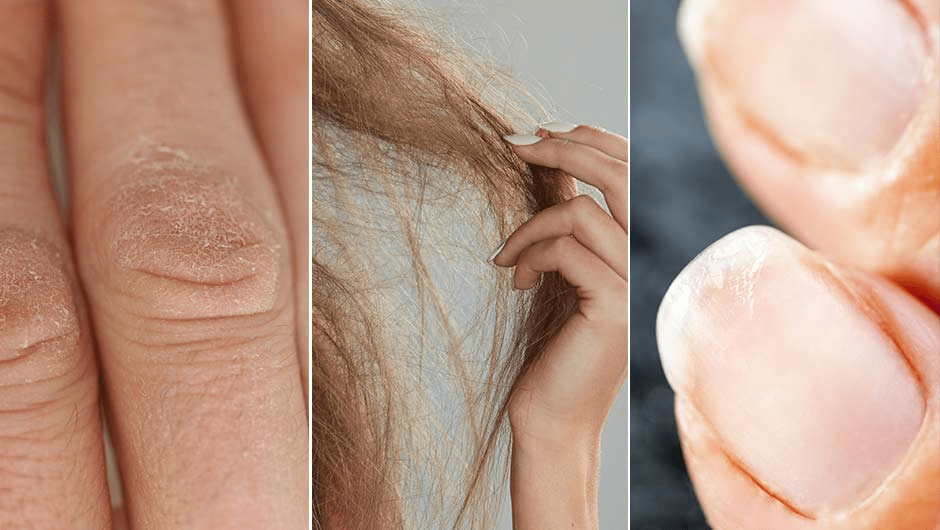
Thyroid hormones influence the rate of cell turnover and tissue regeneration. Low levels slow the renewal of skin, nails, and hair, causing dryness, rough texture, and brittleness.
Reduced thyroid activity also decreases sebum (skin oil) production, making skin flaky, especially in areas like the elbows, shins, and scalp.
Hair follicles are particularly sensitive; reduced hormones shorten the anagen (growth) phase of hair, causing thinning, breakage, and increased shedding.
Nails grow slowly and may peel or split more easily. These visible changes often serve as early, outward indicators of internal hormonal imbalance.
9. Hair Loss, Especially in the Outer Eyebrows

The outer third of the eyebrows is particularly sensitive to thyroid hormone fluctuations. Hair in this region grows in a cycle that is heavily dependent on thyroid hormone signaling.
When levels drop, the growth phase shortens, resulting in thinning that can be subtle at first but becomes noticeable over time.
Scalp and body hair may also be affected, leading to diffuse hair loss.
Hair changes often appear gradually, making comparison with older photographs a useful method for identifying early thyroid dysfunction.
10.Swollen Face or Puffy Eyelids (Myxedema)

Myxedema refers to swelling caused by accumulation of glycosaminoglycans in the skin, which attract and retain water.
Low thyroid activity slows metabolism, causing this abnormal buildup, resulting in a thick, firm swelling of the face, particularly around the eyes.
Unlike normal fluid retention, myxedema is persistent and non-pitting, meaning the skin does not indent when pressed.
The effect is both cosmetic and clinical, often signaling more advanced hypothyroidism that may require medical attention.
11. Hoarseness or Sensation of Tightness in the Throat

Changes in the voice or a persistent sensation of tightness in the throat can signal thyroid enlargement or inflammation.
The voice may become raspy, deeper, or strained, and some people feel as though they need to clear their throat more often. Because the thyroid gland sits at the base of the neck, any swelling can create pressure on nearby tissues, including the vocal cords.
This symptom often accompanies autoimmune-related thyroid conditions, such as Hashimoto’s, which cause gradual inflammation of the gland.
12.Irregular, Heavy, or Painful Periods

Thyroid hormones are crucial regulators of the reproductive system.
They interact with gonadotropin-releasing hormone (GnRH), luteinizing hormone (LH), and follicle-stimulating hormone (FSH), which control ovulation and menstruation.
Low thyroid function can disrupt ovulation, lengthen or shorten cycles, increase menstrual pain, or cause unusually heavy or light bleeding.
These changes may appear without other obvious causes, making thyroid imbalance an important consideration for women experiencing unexplained menstrual irregularities.
13.Elevated Cholesterol, Especially LDL
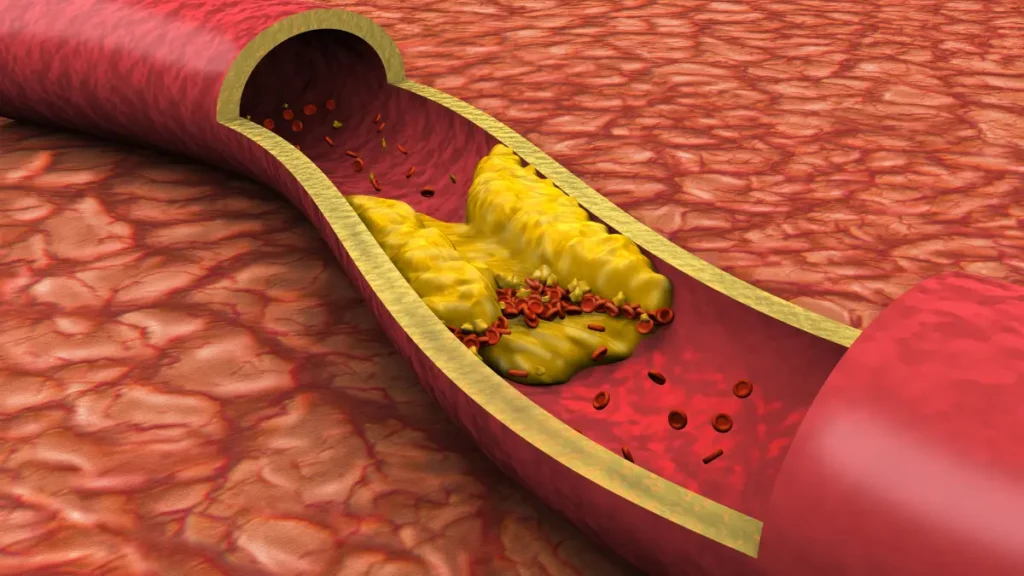
Unexpectedly high cholesterol levels, especially elevated LDL, can indicate that the thyroid is not functioning optimally.
Many people with healthy diets or regular exercise habits are surprised when routine blood tests reveal higher-than-normal cholesterol.
This occurs because the liver depends on thyroid hormones to manage cholesterol metabolism. When thyroid activity slows, the liver may struggle to clear LDL efficiently, causing levels to rise.
Recent findings suggest that even high-normal TSH levels may influence cardiovascular health, making this a key sign to consider.
What to Do if This Sounds Like You (Your Actionable Guide)
If these symptoms feel familiar, it may be helpful to pay closer attention to how they appear together and how long they’ve been present. Keeping track of your experiences can offer valuable insight into patterns and changes in your wellbeing.
Discussing these symptoms with a healthcare professional, along with asking about comprehensive thyroid testing, can help build a clearer understanding of what is happening in your body.
Exploring factors such as nutrient levels, inflammation, gut health, and overall metabolic function may also provide additional context, especially as newer research highlights how interconnected these systems are.
This isn’t about diagnosing yourself, but about approaching your concerns with information and awareness so you can have a productive conversation with your provider.